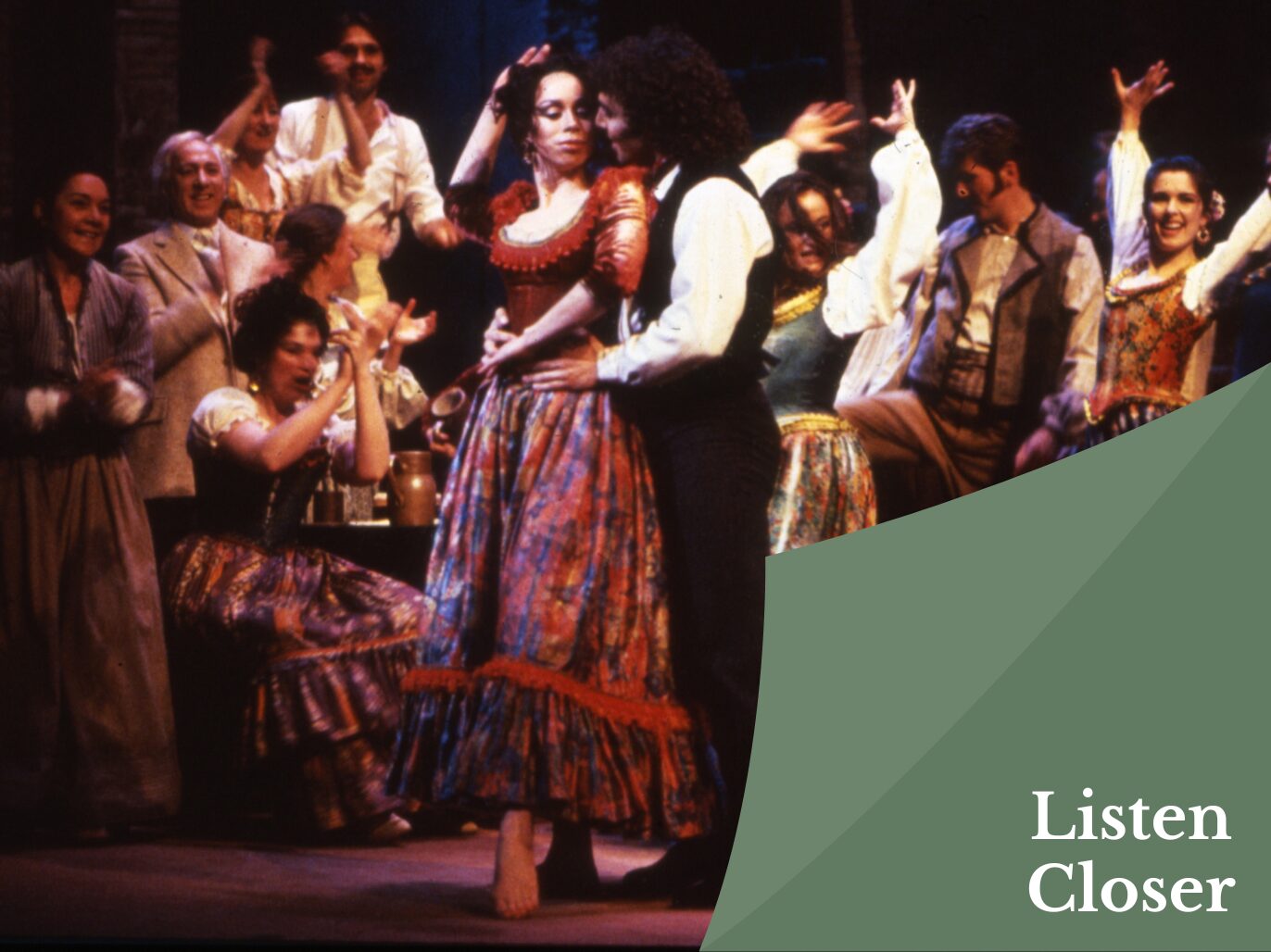
The iconic entrance: Carmen’s first aria
Next time you watch Bizet’s Carmen, pay extra close attention to Carmen’s well-known aria, “L’amour est un oiseau rebelle.” About as close as it gets to a musical blockbuster, Carmen is one of the most frequently performed operas in the repertoire (although it wasn’t always this popular). The aria tops the list in a masterpiece full of memorable melodies.
“L’amour est un oiseau rebelle” marks Carmen’s first appearance in the opera—talk about making an entrance! While the melody is shockingly simple, the result is nothing short of spectacular: starting at the top of her range, she descends chromatically before leaping back up to descend again, and then again. Underneath this sultry descent, Bizet varies the harmonies, veering into both minor and major keys. The sensual fluidity this all creates mirrors Carmen’s flirtatious lyrics: “Love is a rebellious bird / that nobody can tame / and you call him quite in vain / if it suits him not to come.”
If this all feels very exotic for an opera by a Frenchman, that’s because it is—and because it isn’t all 100% Bizet’s handiwork. In order to evoke the opera’s Andalusian setting and its colorful cast of characters, Bizet draws on several tools composers often used to depict far-flung locales like a heavy dose of chromaticism or exotic instruments (here castanets). But he also went straight to the source. Carmen’s dramatic descending melody is actually pulled from a song by Basque composer Sebastián Iradier; Bizet had allegedly mistaken it for a folk tune.